
Centraliza tus operaciones: Por qué un ERP es el motor de tu escalabilidad
Discover why a centralized ERP is essential for scaling your business, eliminating operational chaos, and enabling data-driven decisions for growth.
Centraliza tus operaciones: Por qué un ERP es el motor de tu escalabilidad
In the current business landscape of the Dominican Republic and the Caribbean, growth is often synonymous with complexity. As your company expands, the manual processes that once worked—scattered Excel sheets, disconnected communication channels, and fragmented data—begin to create operational bottlenecks. To scale effectively, you must determine optimal workflows that unify your business intelligence.
What is an ERP and Why is it the Backbone of Your Business?
An Enterprise Resource Planning (ERP) system is a centralized software platform that integrates core business processes—such as accounting, inventory, sales, and human resources—into a single, unified database. Instead of having your sales team in one system and your accounting team in another, an ERP ensures that every department speaks the same language.
When you choose the best sales and inventory system for your growing business, you are not just buying software; you are building a foundation for data-driven decision-making. Without this, you are flying blind, relying on intuition rather than real-time metrics.
The Cost of Disconnected Systems
Many companies struggle with "operational chaos" because they try to patch together free tools. However, as discussed in our guide on the hidden cost of free inventory control versus AI, the time lost in manual data entry and error correction far outweighs the cost of a professional ERP implementation.
Key Signs Your Business Needs an ERP:
* Data Silos: Information is trapped in individual departments, making it impossible to get a 360-degree view of the company. * Manual Errors: High rates of human error in invoicing, inventory tracking, or payroll. * Regulatory Compliance Issues: Difficulty in meeting DGII requirements, especially with electronic fiscal receipts (e-CF). * Scalability Limits: You cannot grow because your current systems require more staff to manage the same volume of work.How to Determine Optimal Operational Efficiency
To determine optimal performance, you must first map your current processes. Are your sales leads connected to your CRM? Does your inventory update automatically when a sale is made? If the answer is no, you are losing money through inefficiency.
By implementing an ERP system that eliminates operational chaos, you gain the ability to automate repetitive tasks. For example, integrating WhatsApp Business API directly into your ERP allows for automated order confirmations and status updates, freeing your team to focus on high-value strategy rather than administrative busywork.
The Role of AI in Modern ERPs
Modern ERPs are no longer just static databases; they are intelligent ecosystems. With AI for business automation, your system can predict inventory shortages, flag suspicious invoices, and even suggest the best times to contact leads based on historical data. This is how you transform from a reactive business to a proactive, market-leading organization.
Moving Beyond Traditional Management
If you are currently evaluating your options, consider reading our analysis on alternatives to SAP for growing businesses. Not every company needs a massive, expensive legacy system. Often, the best solution is a modular, scalable ERP that grows with you.
Steps to Successful Digital Transformation:
Conclusion
Centralizing your operations is the only way to achieve sustainable growth. By moving away from fragmented tools and adopting a unified ERP, you gain the clarity, speed, and efficiency required to dominate your market. At AA High Tech, we specialize in designing these technological ecosystems, ensuring that your transition is seamless and your results are measurable.
Ready to stop the chaos and start scaling? Contact our team of experts today to discuss your digital transformation strategy.
---
Frequently Asked Questions
Q: How do I know if my company is ready for an ERP?
A: If you find that your team spends more time reconciling data in Excel than analyzing it, or if you struggle to provide accurate, real-time reports to stakeholders, your business has outgrown its current manual processes and is ready for an ERP.Q: Is an ERP too expensive for a small or medium-sized business?
A: Not necessarily. Modern cloud-based ERP solutions are designed to be modular. You only pay for the features you need, making it a cost-effective alternative to hiring a large internal IT team or managing multiple disconnected software subscriptions.Q: How long does an ERP implementation take?
A: The timeline depends on the complexity of your business and the number of integrations required. However, with a phased approach, you can begin seeing improvements in operational efficiency within weeks, not years.Q: Can an ERP help with DGII compliance in the Dominican Republic?
A: Absolutely. A robust ERP solution, when properly configured, automates the generation and transmission of electronic fiscal receipts (e-CF), ensuring you remain compliant with DGII regulations without manual intervention.Preguntas Frecuentes
If you find that your team spends more time reconciling data in Excel than analyzing it, or if you struggle to provide accurate, real-time reports to stakeholders, your business has outgrown its current manual processes and is ready for an ERP.
Not necessarily. Modern cloud-based ERP solutions are designed to be modular. You only pay for the features you need, making it a cost-effective alternative to hiring a large internal IT team or managing multiple disconnected software subscriptions.
The timeline depends on the complexity of your business and the number of integrations required. However, with a phased approach, you can begin seeing improvements in operational efficiency within weeks, not years.
Absolutely. A robust ERP solution, when properly configured, automates the generation and transmission of electronic fiscal receipts (e-CF), ensuring you remain compliant with DGII regulations without manual intervention.
Optimiza tu escalabilidad hoy con AA High Tech
Comenzar AhoraArtículos Relacionados

SAP Alternatives: How to Choose a Scalable ERP for Your Growing Business
Discover why growing companies are looking for SAP alternatives and how to implement a custom ERP that centralizes operations without the complexity of legacy systems.

How to Choose the Best Sales and Inventory System for Your Growing Business
Discover how to choose the best sales and inventory system integrated with your ERP to eliminate bottlenecks, automate processes, and scale your company efficiently in 2026.
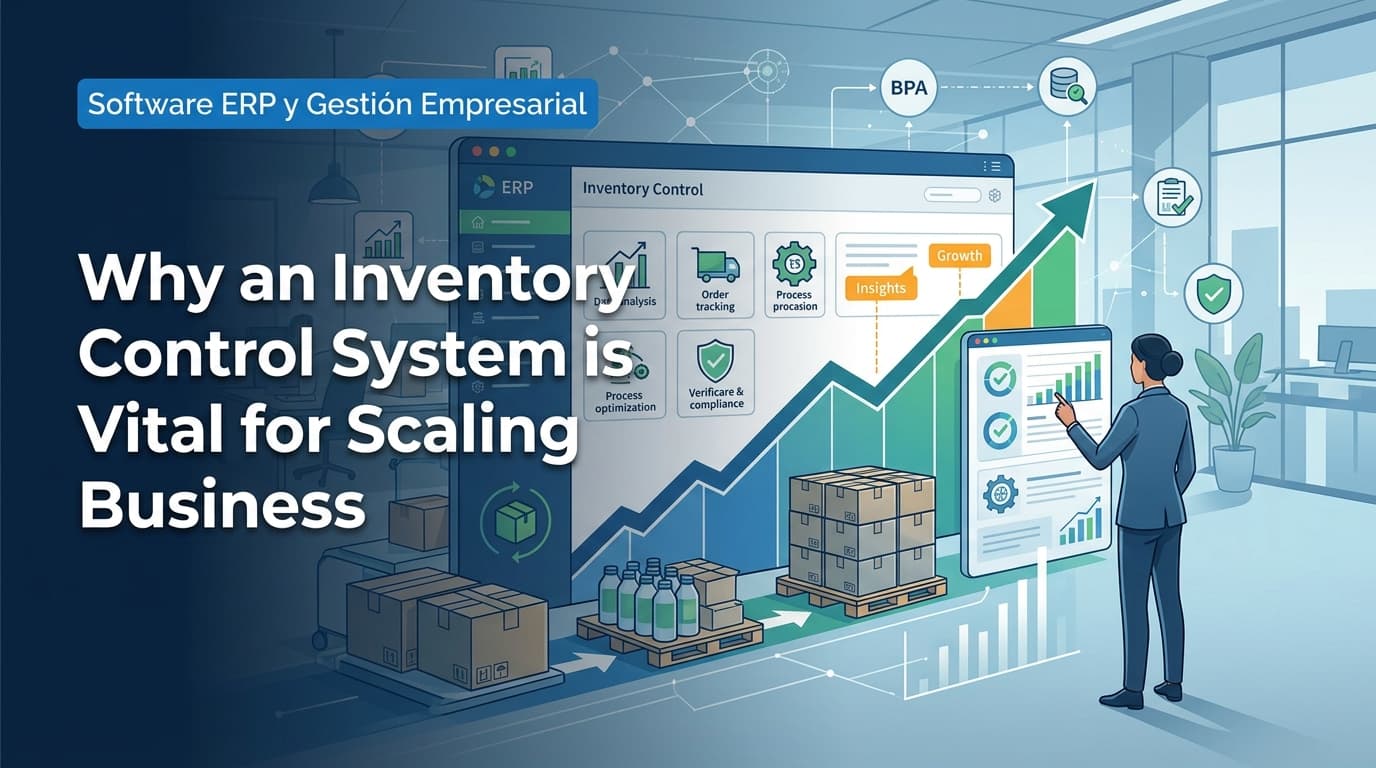
Why an Inventory Control System is Vital for Scaling Your Business
Discover why an inventory control system integrated with an ERP is vital to avoid stockouts, centralize operations, and scale your business effectively.

How an ERP System Software Eliminates Operational Chaos in Your Business
Discover how an ERP system software centralizes your operations, automates processes, and allows your business to scale without the chaos of manual management.
Alternativas a SAP: Cómo elegir un ERP escalable para tu empresa
Descubre por qué las empresas en crecimiento buscan alternativas a SAP y cómo implementar un ERP a medida que centralice operaciones sin la complejidad de sistemas legados.